How they talk about the work
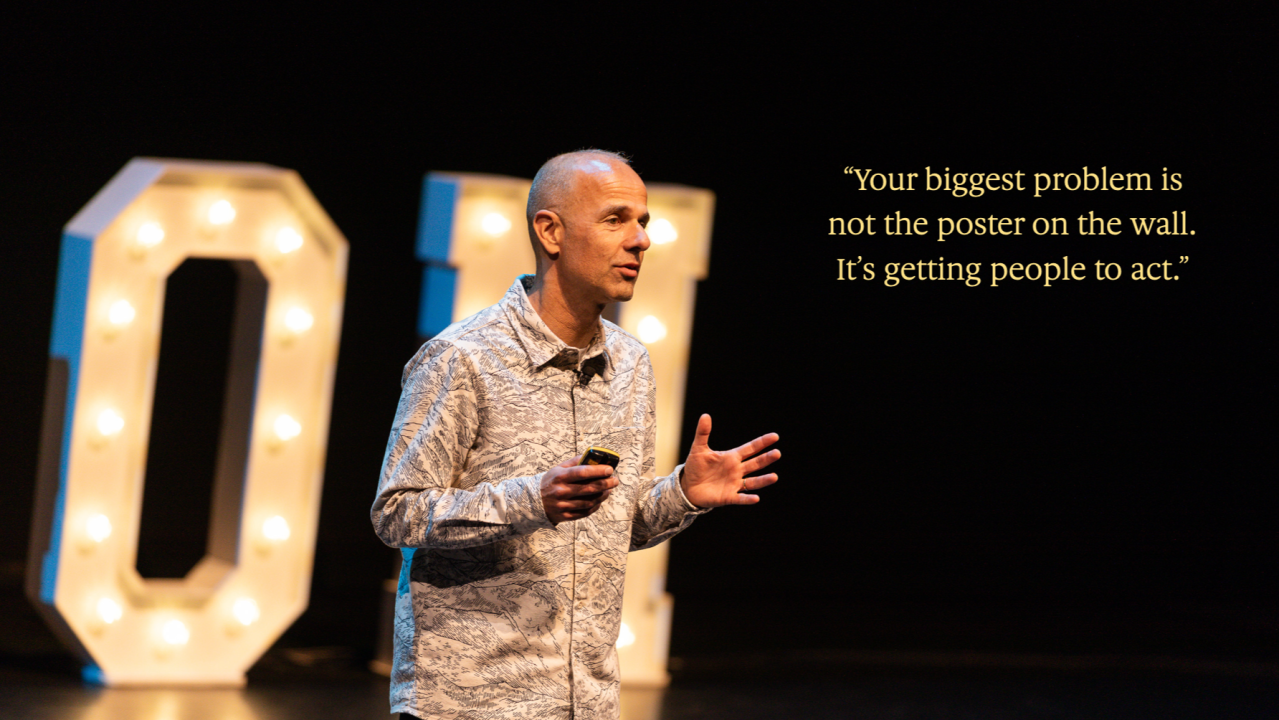
“We repositioned…" No, you didn’t. You created materials. Repositioning happens in the minds of customers, employees, and the market. That’s neither delivered with the design, nor the brand guidelines. “Client X needed a brand that could speak with authority to their target audiences.” The brand doesn’t do anything. People do. A brand is an abstract thing – pretending it can “speak” or “do” anything for you is a sign of magical thinking. Look at the work: it’s a logo, colours, words, images. Beauty is in the eye of the beholder. But your biggest problem is not the poster on the wall or the animation on the website. It’s how you get it off the poster and into people’s actions.
How they talk about their role
“We were given the brief…" Notice the passivity. The agency receives, then delivers. This framing excludes everyone who'll need to live with the outcome – your sales teams, your operations people, your regional leaders. They weren't in the room. They'll find out later. Then there’s the case study that lists “what we delivered” – GTM strategy, digital experience, website, brand guidelines. This is a menu of services, not a description of change. It tells you what you can buy. It tells you nothing about what changed.
What they bolt on afterwards
The Engagement Director describes how, in addition to the brand work, they ran a programme to bring people on board. Each location now has a “brand champion.” Do you really believe this will work? These champions will do this on top of their job, not as part of their role. It’s a bolt-on to a bolt-on. You're counting on their passion, but they have no leverage whatsoever. The whole language speaks of something delivered to the business, not created with it.
Here’s a thought: repositioning your business means repositioning it in the minds of your own people first.
Visuals add excitement. A new identity can look cool, create pride. But they don’t, in themselves, change anything. Your sales team won’t suddenly embrace new messaging because the brand book says so. Your regional leaders won’t think differently about the strategy because the logo changed. At best, they like it. More likely, they see it as 'marketing' – nothing to do with them.
What you can do
When you commission brand work, you’re buying three things – whether you know it or not.
First, the artefact. The logo, the visuals, the guidelines. Yes, this needs doing, and it needs doing well.
Second, how it’s anchored in the business. Are the people who need to live with this involved in creating it? Or will you be “launching” it to them later and hoping they get on board?
Third, how people think. Does anyone come out of this process thinking differently about their role, their contribution, the strategy? Or is it just a new coat of paint on the same patterns and behaviours? Most agencies only sell you the first. Some acknowledge the second but treat it as a change management add-on. Almost none touch the third – because it needs a completely different way of working.
So here's the question: when did your agency last talk about what the work did to your business?
Not what they made. What changed. The late Michael Wolff once told me: “You sow the seeds of your own downfall in the brief.” He was talking to me as a designer. But it applies to you as the buyer, too. Are you clear what you’re really trying to achieve? A visual uplift for marketing? Or a repositioning that reaches sales, operations, leadership – that actually affects how your organisation thinks and acts? If it’s the latter, you’re not commissioning a project to be delivered. You’re embarking on an expedition. And that requires a different kind of partner. If this sounds familiar – or if you’ve watched brand work fade into irrelevance despite everyone’s best intentions – I’d be curious to hear your experience.